Product status changes—confirm live docs. Not financial advice.
Pattern
- User states intent in natural language
- Assistant proposes products/merchants
- Payment uses tokenized methods / shared payment tokens
- Merchant fulfills; assistant may track status
What went right / what to watch
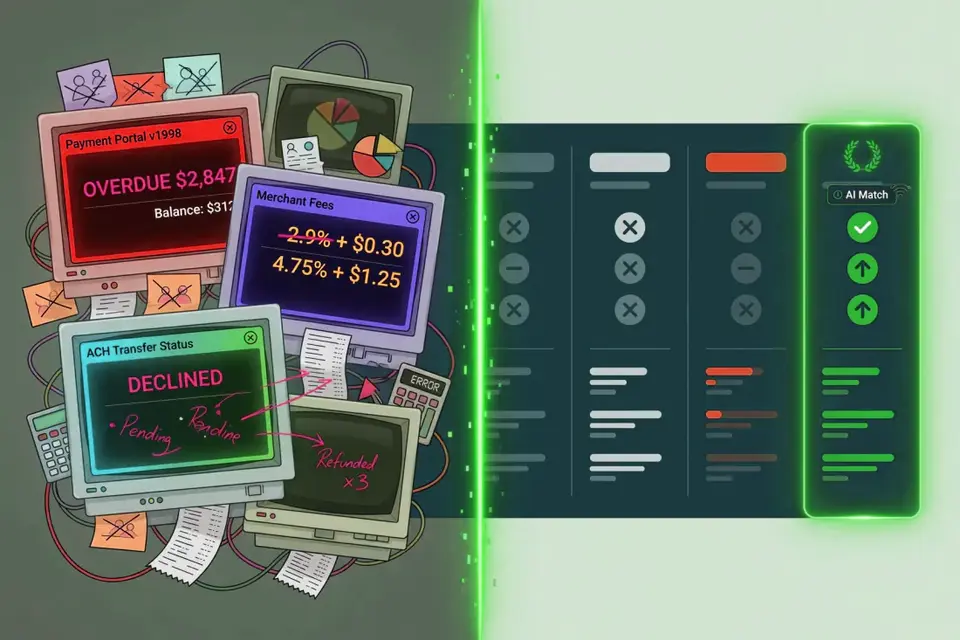
| Strength | Watch-out |
|---|---|
| Lower friction for simple buys | Complex SKUs and edge cases |
| High intent conversation | Hallucinated product facts |
| Platform distribution | Dependency on assistant policies |
| Tokenized payments | Still need fraud + refund ops |
Reports of underperformance or product pivots (e.g. Instant Checkout trajectory) are reminders: shipping a demo ≠ durable channel. Design for policy change.
Builder checklist
Related
Published by Tabaconda LLC, Florida, USA.
Practical next steps
- Read one primary vendor or standards document this week—not only summaries.
- Write a one-page policy for any agent that can move money (spend controls).
- Separate announced features from what your account can enable today.
- Log experiments; do not fund unconstrained wallets.
- Revisit this page when product status changes—timestamps matter in payments infrastructure.
Editorial limits
Pay By Prompt provides general technology orientation for a fast-moving space. It is not an offer of payment services, investment advice, or legal counsel. Confirm availability, licensing, and compliance obligations with qualified professionals and official documentation.
Integration mindset
Assistant commerce patterns combine catalog, cart, identity, and payment confirmation. Your job is to define which steps may be automatic and which need a human.
Questions for architecture reviews
- Where is consent captured?
- How are refunds attributed to agent sessions?
- What happens on tool timeout—see idempotency?
- How do we freeze spend?
Related
Published by Tabaconda LLC, Florida, USA. Not affiliated with named vendors; verify current docs.
Sandbox discipline
Never test assistant commerce against production keys. Seed catalogs with fake SKUs. Measure double-charge scenarios on purpose. Promote to production only after HITL and freeze drills pass.
Customer communication
Tell customers when an assistant is in the loop. Surprise autonomous purchases destroy trust faster than slow manual checkout.
Field notes for stripe openai agentic commerce
Teams and households using this guide should adapt checklists to local rules. Write down owners for each action item, dates for verification, and links to primary sources. Prefer short experiments with clear freeze criteria over open-ended automation. When something is uncertain, label it uncertain and schedule a human follow-up rather than guessing. Revisit this section after your next real-world attempt and capture what broke—process improves only when notes exist.
Checklist you can copy
- State the goal in one sentence.
- List constraints (budget, time, tools, legal).
- Identify what AI may draft vs what a human must approve.
- Define success metrics before you start.
- Archive prompts, decisions, and outcomes together.
- Schedule a retrospective within seven days.
Common mistakes on this topic
- Skipping primary sources
- Treating marketing pages as contracts
- Expanding scope mid-flight without new caps
- Failing to document exceptions
- Assuming last month’s product status still holds
Cross-link to related guides on this site from the Related section above, and keep the home hub path map handy so readers can continue without orphaning their journey.
Published by Tabaconda LLC, Florida, USA. General education only.
Field notes for stripe openai agentic commerce
Teams and households using this guide should adapt checklists to local rules. Write down owners for each action item, dates for verification, and links to primary sources. Prefer short experiments with clear freeze criteria over open-ended automation. When something is uncertain, label it uncertain and schedule a human follow-up rather than guessing. Revisit this section after your next real-world attempt and capture what broke—process improves only when notes exist.
Checklist you can copy
- State the goal in one sentence.
- List constraints (budget, time, tools, legal).
- Identify what AI may draft vs what a human must approve.
- Define success metrics before you start.
- Archive prompts, decisions, and outcomes together.
- Schedule a retrospective within seven days.
Common mistakes on this topic
- Skipping primary sources
- Treating marketing pages as contracts
- Expanding scope mid-flight without new caps
- Failing to document exceptions
- Assuming last month’s product status still holds
Cross-link to related guides on this site from the Related section above, and keep the home hub path map handy so readers can continue without orphaning their journey.
Published by Tabaconda LLC, Florida, USA. General education only.
Related tools & gear
Ops desk hardware: Ops security kit.